
A fallen tree is not the end
Walk through almost any forest and you will eventually come across a fallen tree.
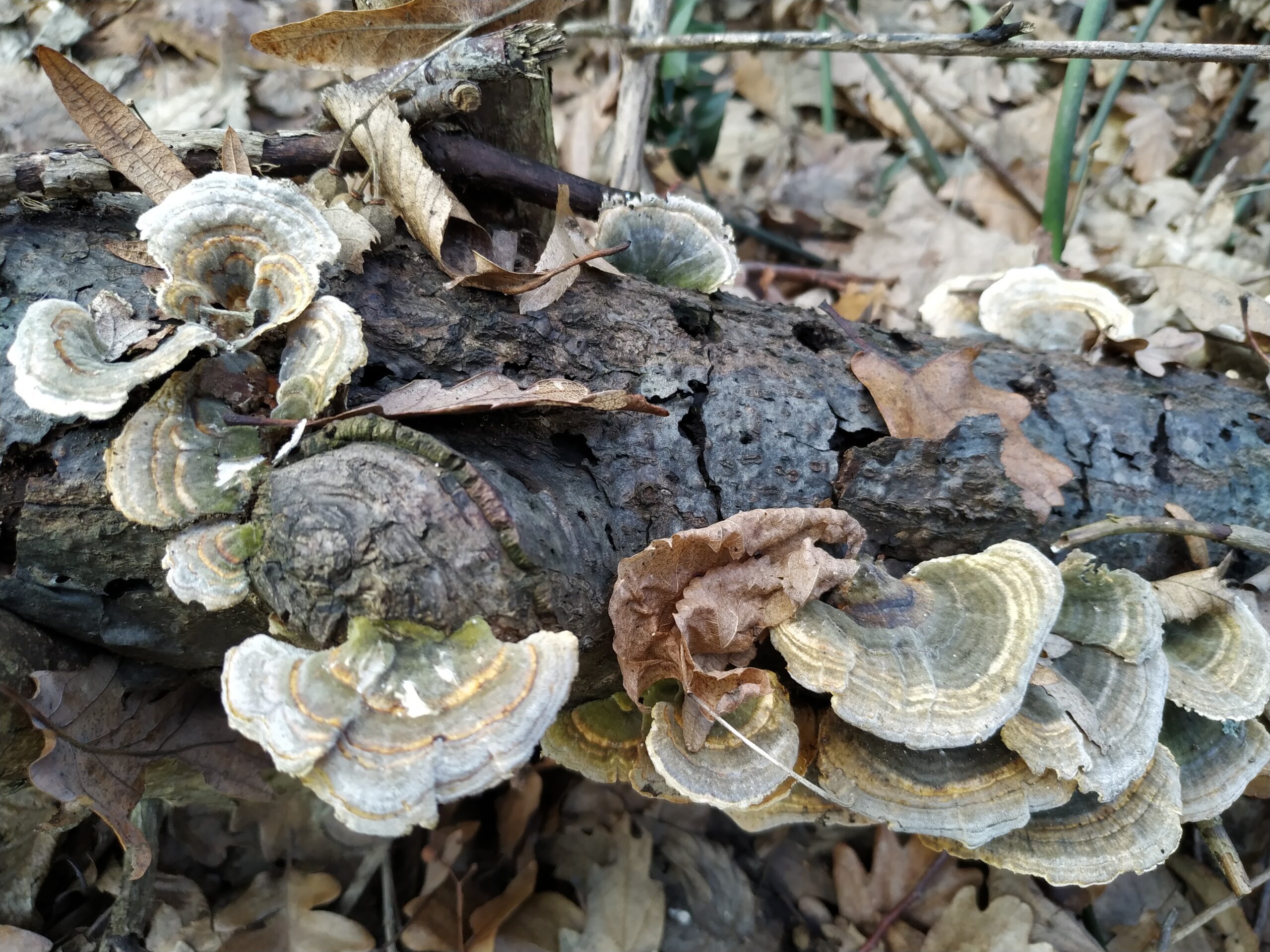
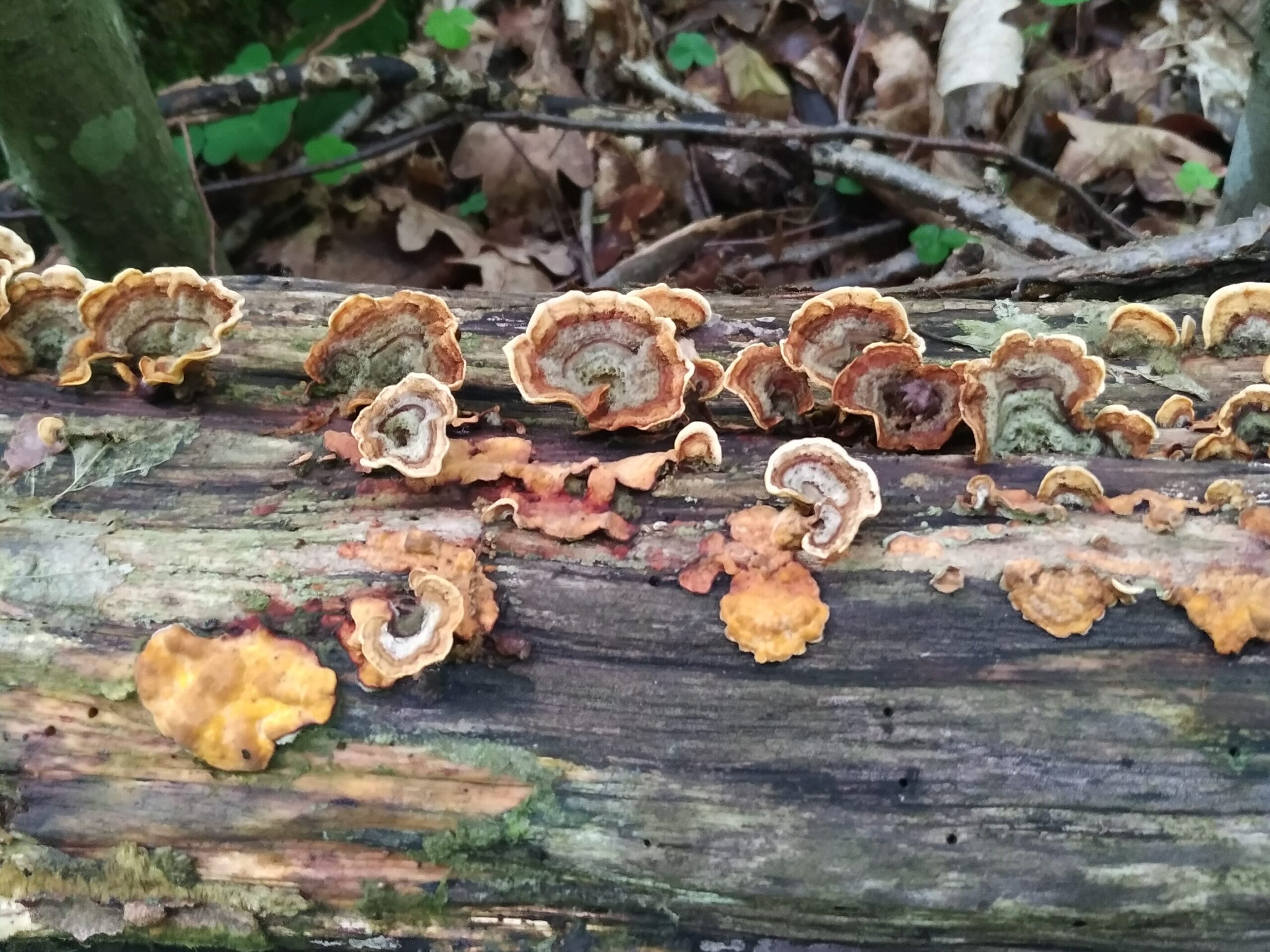
Perhaps it has been lying there for years. Its bark is peeling away, moss is beginning to spread across its surface, insects disappear into tiny cracks and clusters of fungi emerge from the wood like small shelves stacked one above another.
To many people, it is a sign of decay. A tree that has reached the end of its life.
But forests tell a very different story.
In nature, death is rarely an ending. It is a transformation. Every fallen trunk becomes the foundation for new life, supporting organisms that recycle its wood, return nutrients to the soil and create space for the next generation of the forest.
Among those carrying out this remarkable process is a colourful fungus called Trametes versicolor.
The mushroom that keeps the cycle moving
Imagine if nothing in a forest ever decomposed.
Every branch that fell would remain where it landed. Every dead tree would slowly accumulate, locking away enormous amounts of carbon, nitrogen, phosphorus, calcium, and countless other elements within its wood. Over time, fewer nutrients would return to the soil, making them unavailable to young plants and trees. A healthy forest depends just as much on decomposition as it does on photosynthesis.
This is where fungi become indispensable.
Unlike animals, they do not consume food by eating it. Instead, they release powerful enzymes into their surroundings, breaking complex organic matter into smaller molecules that can be absorbed and reused. Only a relatively small group of fungi can efficiently decompose wood. Even fewer can break down one of its toughest components: lignin.
Trametes versicolor is one of those specialists.
By decomposing both lignin and cellulose, it gradually transforms what appears to be lifeless timber into nutrients that can once again become part of the living forest. What looks like decay is, in reality, renewal. Nature rarely relies on a single species. Trametes versicolor is one representative of a larger group of wood-decaying fungi whose enzymatic abilities continue to inspire ecological and biotechnological research.
Meeting the quiet architect
Once you know what to look for, Trametes versicolor becomes surprisingly easy to recognize.
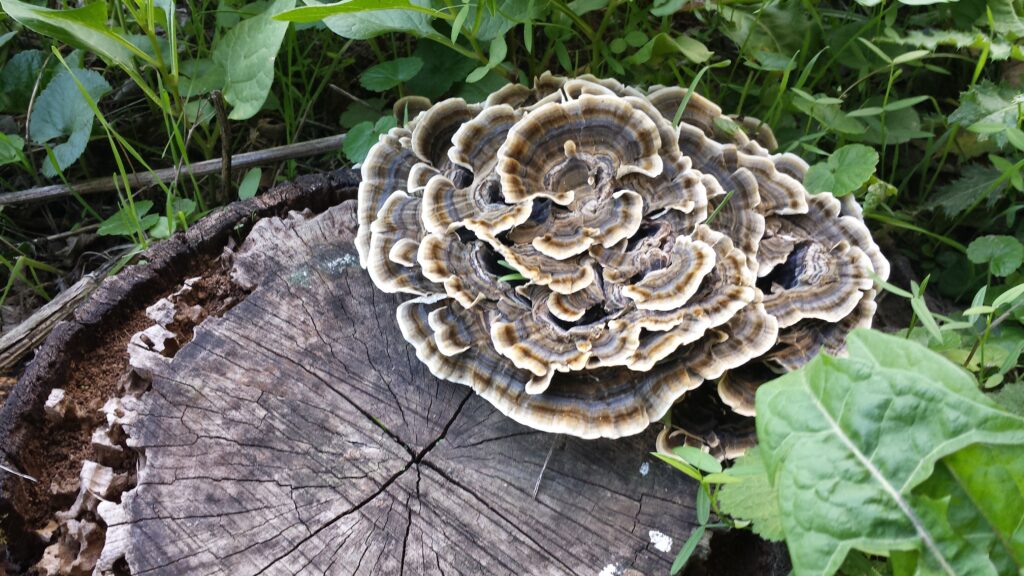
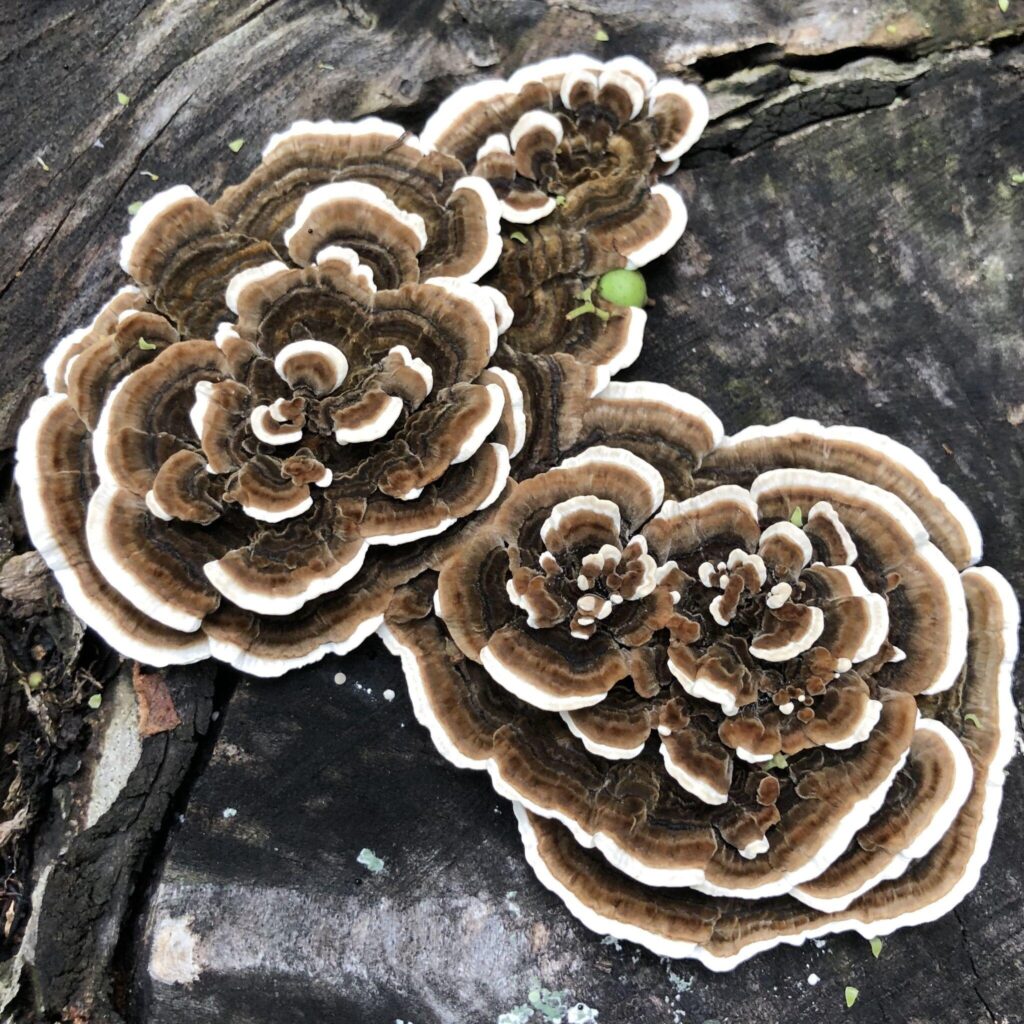
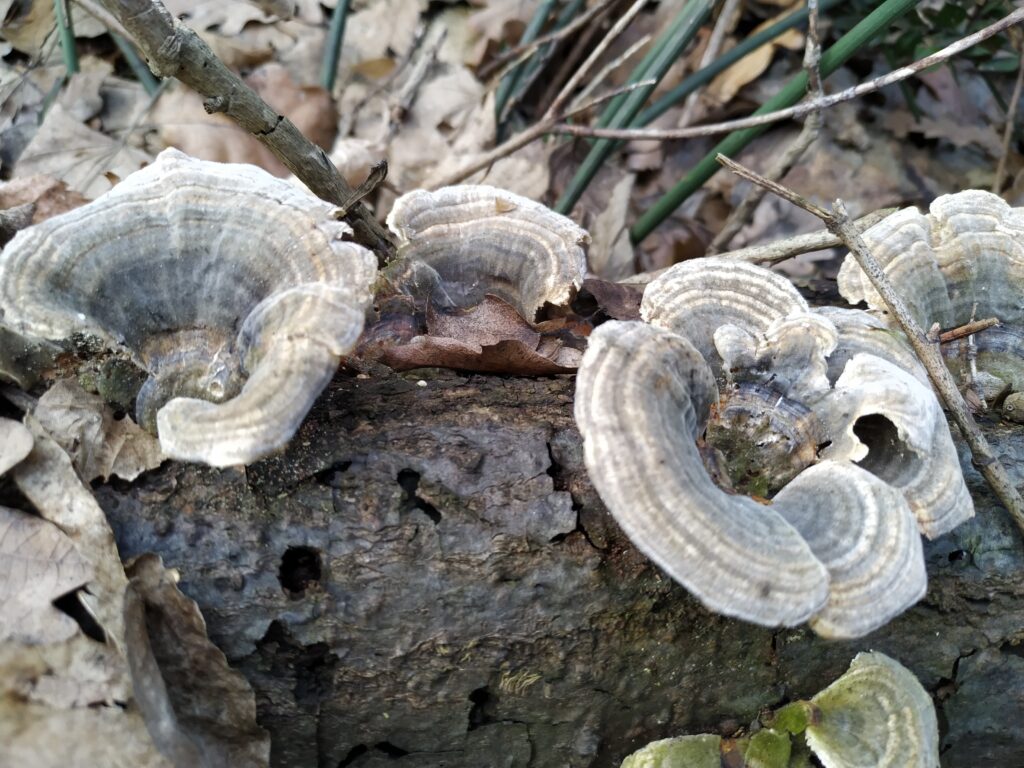
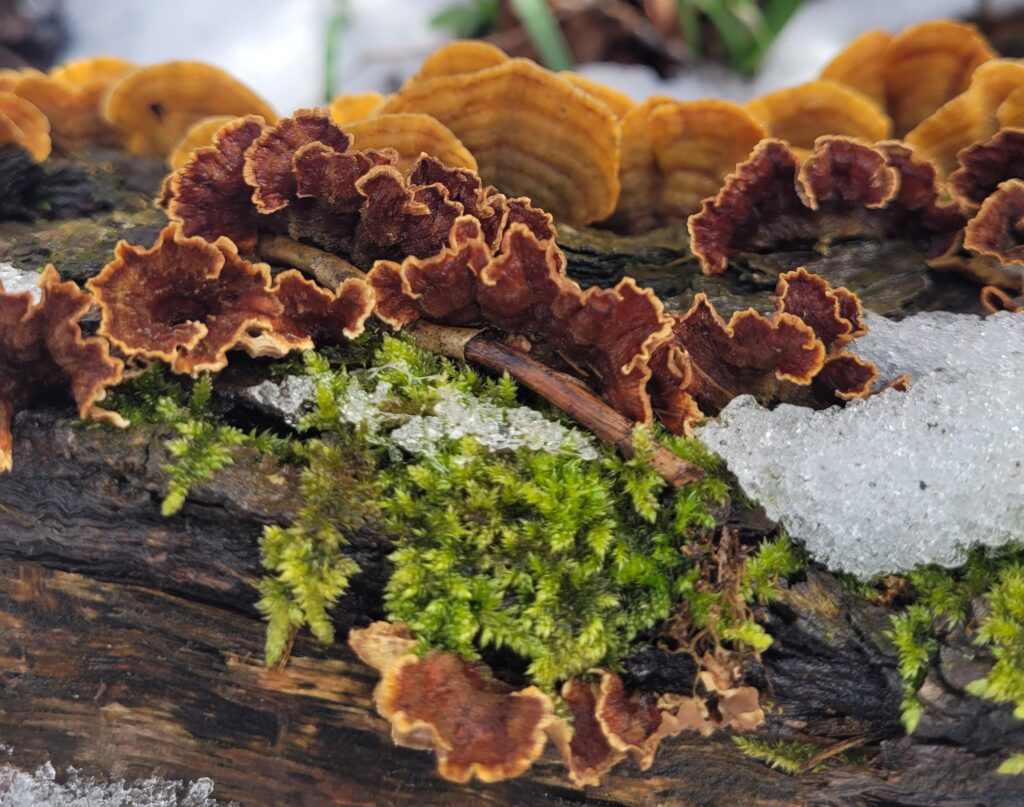
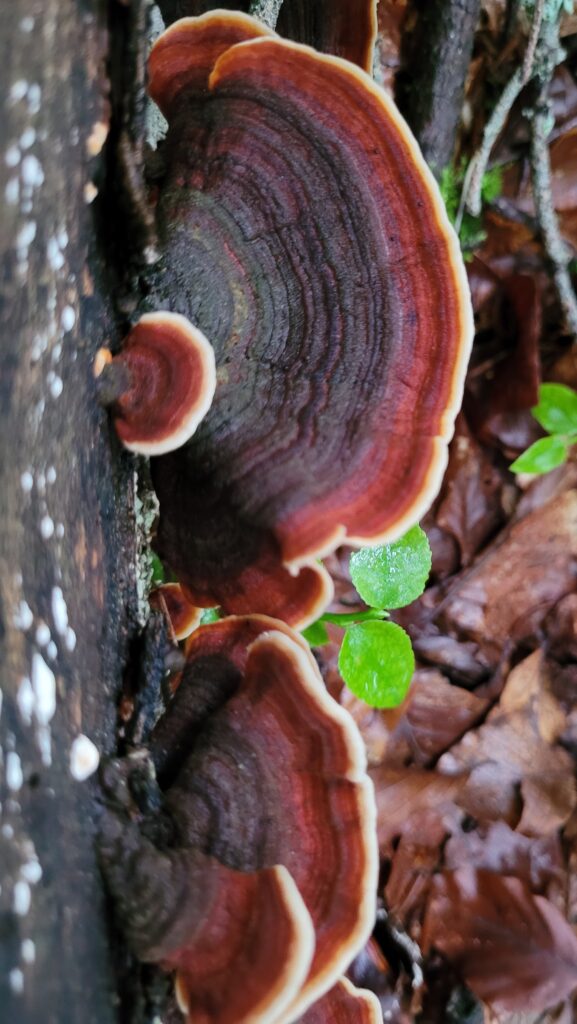
Its fruiting bodies grow in overlapping layers, forming thin, fan-shaped shelves that spread across fallen trunks and branches. Their surfaces are covered with concentric bands of brown, grey, cream, orange, blue, and green, giving each colony the appearance of carefully painted brushstrokes.
The species name versicolor means “of many colours,” while its English common name, Turkey Tail, comes from its resemblance to the tail feathers of a wild turkey.
It grows throughout Europe, Asia, and North America, most commonly on dead hardwoods such as beech, oak, maple, and elm, although it can occasionally colonize conifers as well. In our forests, it is among the most common wood-decaying fungi, quietly carrying out work that often goes unnoticed.
The colourful brackets we see are only the reproductive structures. Most of the fungus lives hidden within the wood itself, where a network of microscopic filaments slowly digests one of the strongest biological materials on Earth.
The chemistry of decomposition
Trees owe much of their strength to lignin.
If cellulose forms the framework of wood, lignin acts like the glue that binds everything together, allowing trees to grow tall, withstand storms and survive for decades or even centuries.
For the same reason, lignin is exceptionally difficult to break down.
Most organisms simply cannot do it.
Trametes versicolor can.
It produces an extraordinary array of extracellular enzymes capable of dismantling both lignin and cellulose, causing what scientists describe as white rot. As these compounds are degraded, nutrients that have remained locked inside the wood for years gradually return to the ecosystem.
Without this chemistry, forests would look very different.
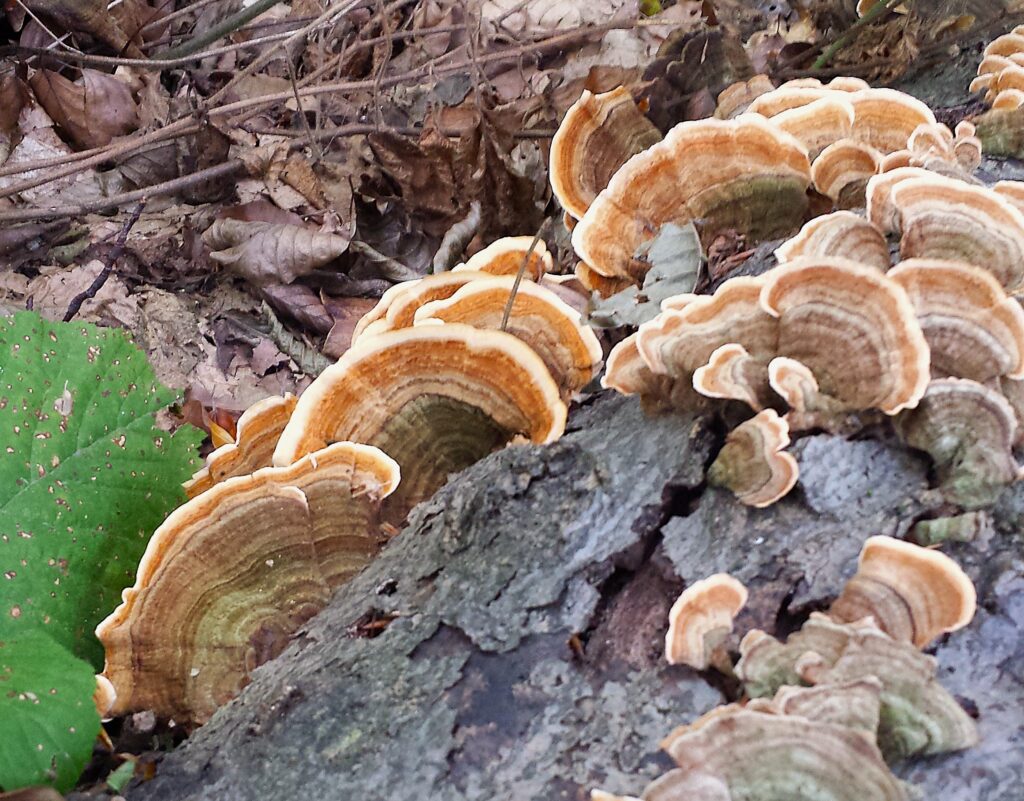
Dead wood would accumulate far faster than it could disappear and the continuous recycling of nutrients that sustains forest life would slow dramatically. A fallen branch becomes a living habitat as bracket fungi gradually return its nutrients to the forest.
Lessons beyond the forest
Once scientists understood how efficiently Trametes versicolor breaks down one of nature’s most resilient materials, an obvious question emerged: could these biochemical abilities be useful beyond the forest?
Today, this fungus is investigated for applications far beyond forest ecology.
Its enzymes are being explored for the bioremediation of contaminated environments, wastewater treatment, the degradation of industrial pollutants, more sustainable production processes, and the development of novel biomaterials. Researchers continue to study how fungi accomplish, under ordinary forest conditions, chemical reactions that often require energy-intensive industrial methods.
Nature has spent millions of years refining these solutions. Even after decades of research, much of the biochemical potential of fungi remains unexplored, reminding us that forests are not only reservoirs of biodiversity, but also of knowledge we have yet to discover.
More than a medicinal mushroom
For many people, Trametes versicolor is best known not because of its ecological role, but because of its medicinal potential.
Researchers have identified numerous biologically active compounds in this species, including β-glucans, phenolic compounds and two extensively studied polysaccharopeptides known as PSK and PSP. These compounds have attracted considerable scientific attention for their immunomodulatory and antioxidant properties.
One of them, PSK, has been used in Japan for decades as an approved adjunct to certain cancer treatments, where it is administered alongside conventional therapy under medical supervision. This is an important distinction: the relevant medical research concerns purified, well-characterized compounds studied under controlled clinical conditions, not the indiscriminate use of wild mushrooms as medicine.
Its medical significance is fascinating.
But it is worth remembering that, long before humans discovered these compounds, T. versicolor was already performing another essential task – keeping the forest’s cycles in motion.
From the forest to laboratory
Among the countless fungal species found in forests, Trametes versicolor became one of the central organisms in my own research.
During my doctoral studies, I worked with this species in submerged culture, investigating how it responds to environmental stress and how its biochemical composition changes over time. Instead of observing it only on a fallen log, I came to know it through biomaterials, submerged cultures, laboratory analyses and the remarkable diversity of compounds it produces.
That experience changed the way I look at forests. Whenever I encounter these colourful fruiting bodies on old wood, I no longer see only a mushroom.
I see an organism that connects ecology, chemistry, biotechnology and medicine through a single, continuous story.
Looking at forests differently
The next time you find a fallen tree, resist the temptation to see it as something lifeless.
Pause for a moment.
Look closer.
Forests are sustained not only by the trees reaching toward the sky, but also by the countless organisms quietly returning fallen wood to the living world. A fallen tree becomes a living ecosystem, supporting organisms that will shape the forest long after the tree itself has disappeared. In a forest, the most important work often begins after a tree has fallen.