
Some signs of spring arrive quietly.
The first leaves unfolding. Wild greens returning after winter. The scent of soil warming in the sun.
Others announce themselves.
You hear them before you see them.
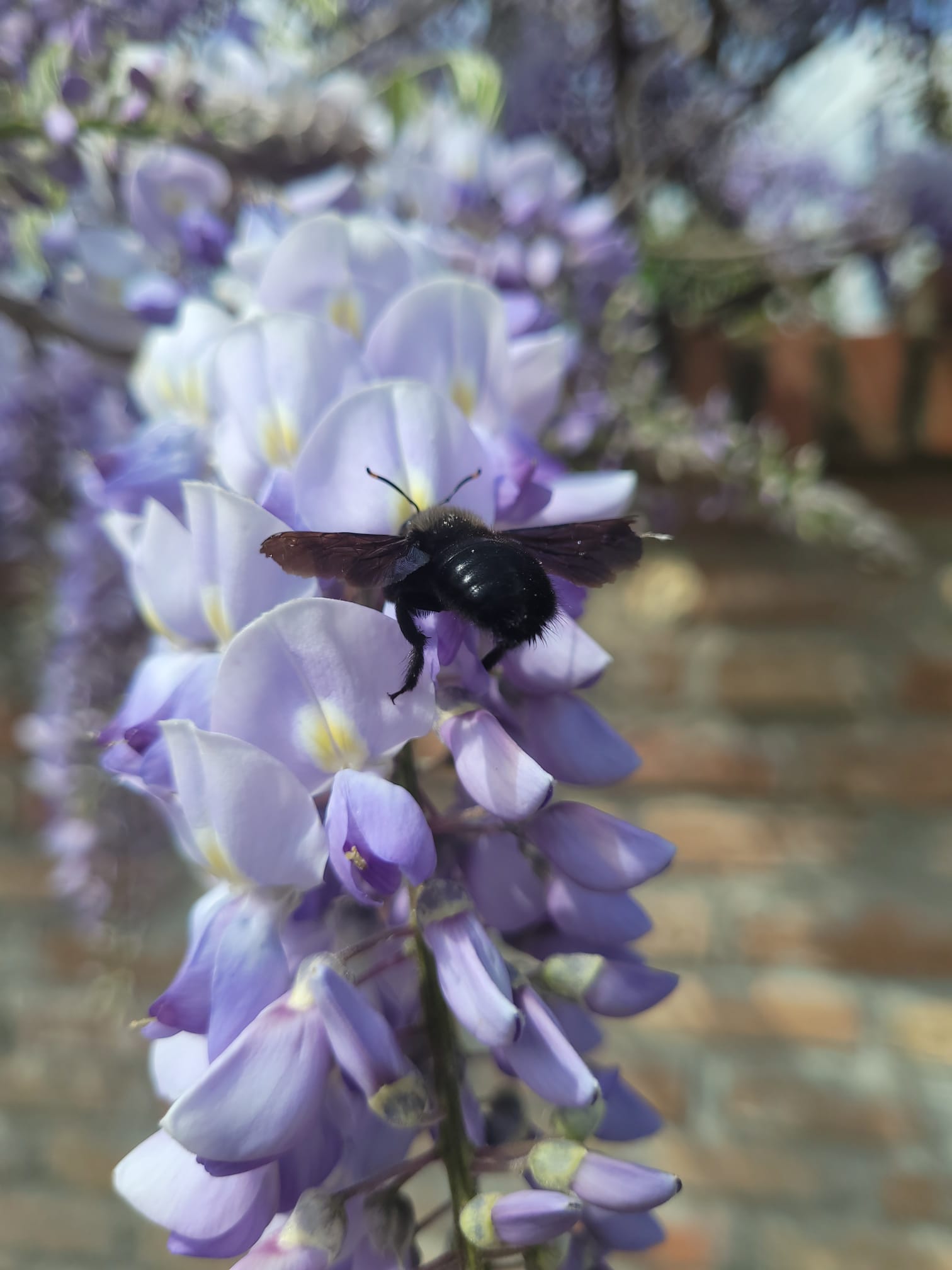
A deep, unmistakable hum moves through the garden, somewhere above eye level, around the hanging clusters of wisteria flowers. For a moment, it almost sounds too large to belong to a bee.
Then it appears.
Dark. Fast. Almost velvet-black against the pale violet flowers. A carpenter bee (Xylocopa sp.).
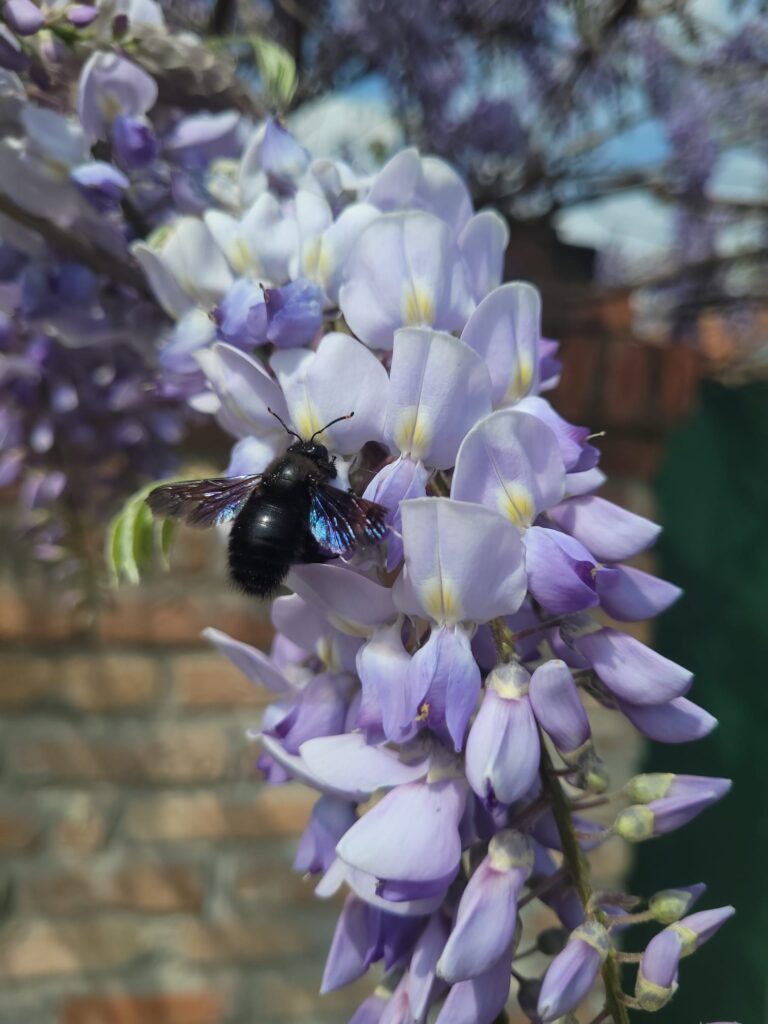
At first glance, they can seem intimidating. They are larger than most bees people encounter, louder in flight and impossible to ignore. Yet despite their appearance, carpenter bees are among spring’s quieter workers, not because they make little sound, but because their role often goes unnoticed.
While we stop to admire the flowers, they are already moving between them.
Nature has already started working.
MORE THAN AN ORNAMENTAL PLANT
Wisteria is usually planted for beauty.
Its cascading flowers transform walls, pergolas and gardens into shades of violet and pale lavender for only a short part of the year. People stop to photograph it. Walk beneath it. Wait for it to bloom.
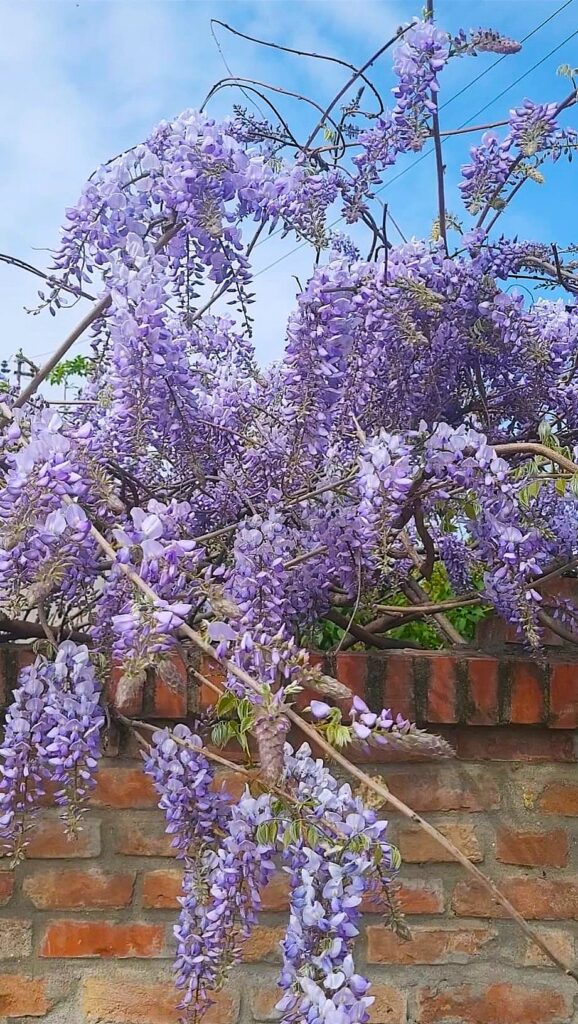
But standing beneath flowering wisteria for long enough reveals another layer entirely.
The garden becomes active.
Honeybees move from flower to flower with quite precision.
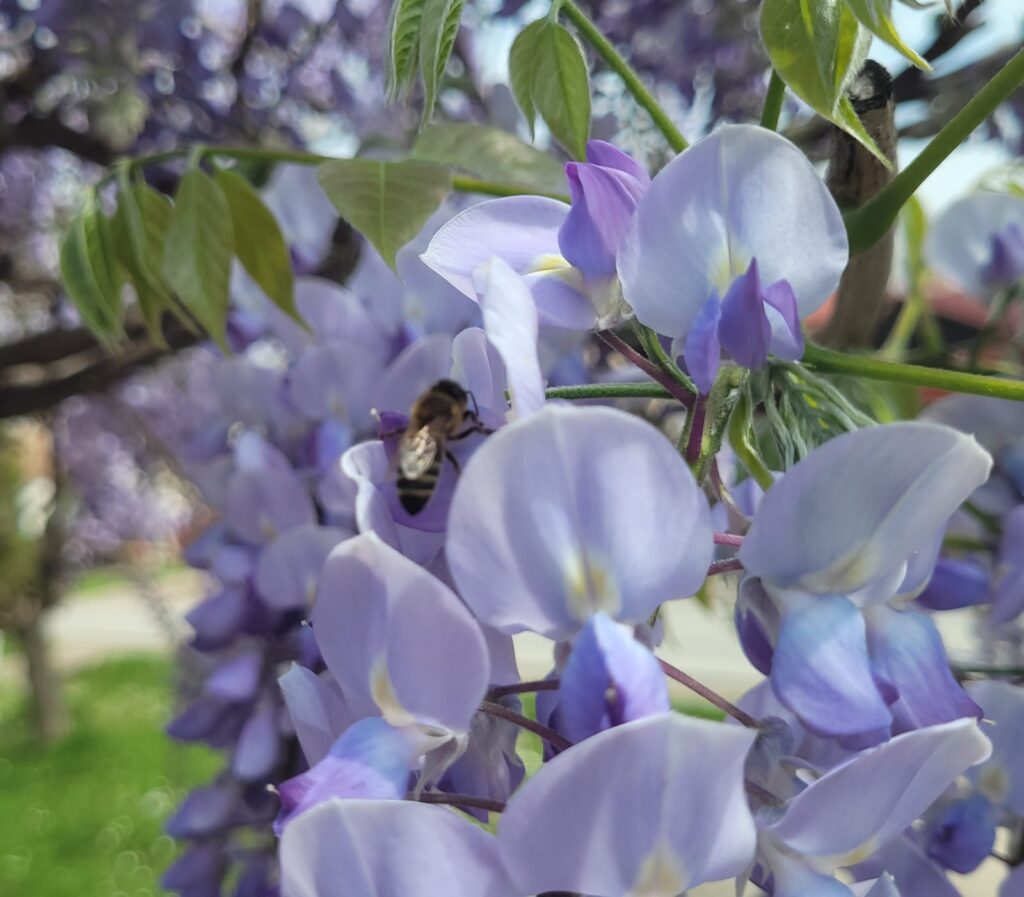
Butterflies arrive briefly, almost drifting between blossoms.
Then come the carpenter bees – larger, slower in appearance, yet powerful in flight, carrying that low hum through the air.
What looks like decoration suddenly becomes habitat.
One flowering vine.
Several pollinators.
One living system.
THE MISUNDERSTOOD VISITORS OF SPRING
Carpenter bees are often mistaken for something dangerous.
Their size alone is enough to make people pause.
They are larger than most bees we encounter in gardens, their flight carries a deep vibration through the air, and they have a habit of hovering nearby as if inspecting every new arrival.
Many people interpret this as aggression.
It usually is not.
Male carpenter bees often patrol flowering areas and may fly close to people, darting through the air with surprising confidence. Despite the performance, males cannot sting at all. Females can sting, but they are generally docile and rarely do so unless they feel threatened or become trapped.
Most of the time, they are occupied with something entirely different.
Flowers. Nectar. Pollen. Spring.
MORE THAN A POLLINATOR
Despite the name, carpenter bees do not eat wood.
The tunnels they create are homes.
Unlike honeybees that live in colonies, carpenter bees are solitary. Each female builds her own nest, often reusing and extending existing galleries year after year.
Dead wood, weathered timber and natural cavities become nurseries for the next generation.
In spring, the adults emerge again and return to the cycle.
Flowers bloom.
Pollinators return.
The garden starts humming once more.
A SMALL ECOSYSTEM IN BLOOM
These photographs captured more than a bee visiting flowers.
Within the same flowering wisteria appeared several visitors:
A carpenter bee carrying the unmistakable deep hum of spring.
Honeybees moving quietly among the blossoms.
A butterfly resting between the hanging flowers.
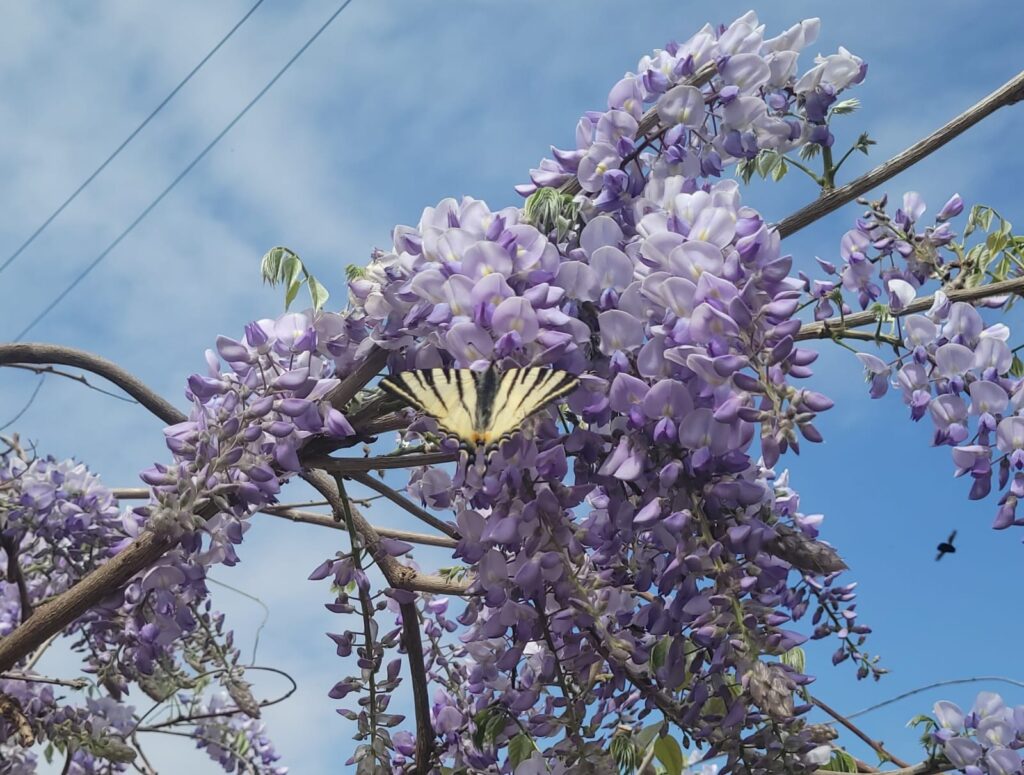
Different species.
Different strategies.
One shared resource.
What looked like a flowering vine became something else entirely.
A small ecosystem in bloom.
AND THE GARDEN STARTS TO HUM
The deep sound of carpenter bees is one of those moments that changes how a place feels.
A garden stops being only a garden.
It becomes movement.
Exchange.
Interaction.
The flowers bloom.
The pollinators arrive.
The garden starts to hum.
What appears to be a simple spring scene is, in reality, thousands of biological interactions unfolding at once.
Beneath the sound of wings and the scent of flowers, an ecosystem is at work.