
Spring rarely arrives all at once.
In temperate forests, the first changes happen close to the ground. Before tree canopies fully open and before summer vegetation takes over the woodland floor, biological activity begins returning beneath layers of fallen leaves.
Moisture re-enters the soil. Microbial and fungal activity increases. Organic matter accumulated through winter slowly starts breaking down again.
Then, among the leaf litter, patches of green begin emerging across the forest floor.
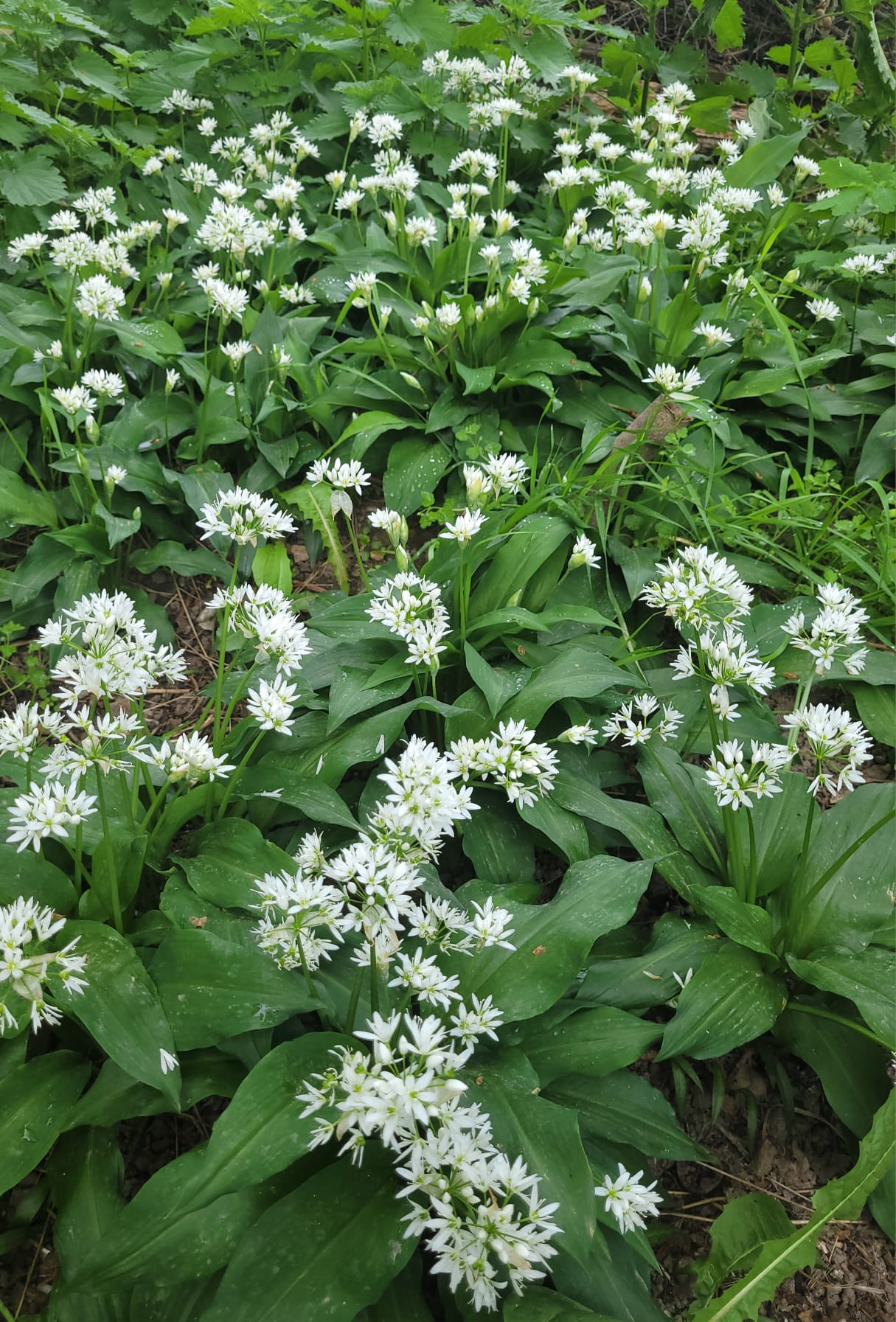
One of the first plants to emerge is wild garlic (Allium ursinum).
Known across Europe as ramsons and traditionally called bear’s garlic, it is one of the most recognizable edible plants of spring. Yet wild garlic is more than a seasonal ingredient. Its arrival signals a broader ecological transition as forests awaken from winter dormancy.
Like many woodland species, wild garlic is rooted in living ecosystems shaped by decomposition, nutrient cycling and the countless biological interactions unfolding beneath the forest floor - processes explored further in Hidden Forests, Hidden Networks.
A Plant of Living Forests
Wild garlic naturally occurs throughout much of Europe and parts of Western Asia, growing in humid deciduous forests, ravines, stream valleys and shaded slopes.
In early spring, it often forms dense green carpets across the woodland floor, sometimes covering entire sections of forest.
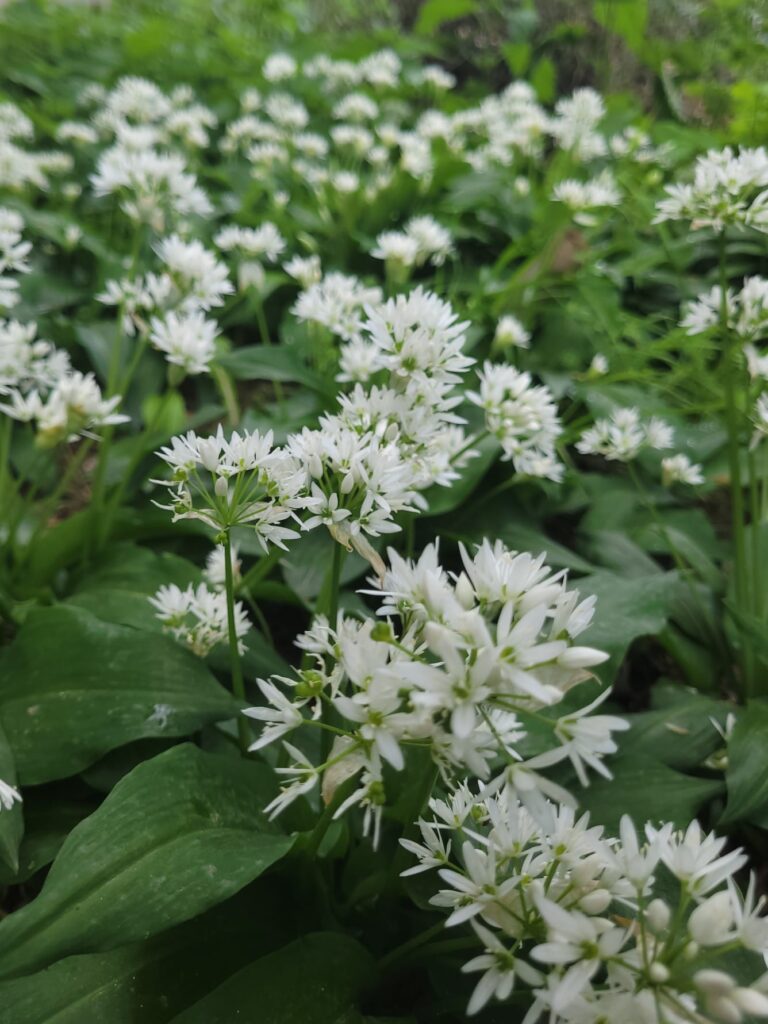
These colonies are not random.
Wild garlic prefers humus-rich soils, stable moisture and biologically active environments where organic matter is continuously recycled. Its presence frequently reflects healthy woodland systems with active decomposition and strong nutrient turnover.
Finding wild garlic often means finding a forest ecosystem in balance.
In this sense, the plant becomes more than food. It becomes a visible sign of the hidden processes taking place beneath the forest floor.
Spring Begins Below Ground
We often think of spring as something visible - flowers opening, birds returning, trees producing leaves.
But forests awaken earlier than that.
Long before the canopy closes and before most plants become visible, microbial communities increase their activity beneath the soil. Organic matter decomposition accelerates, nutrients begin cycling again and fungal communities resume their activity within the woodland floor.
Wild garlic is among the first visible signs of this hidden transition and its emergence reflects precise ecological timing.
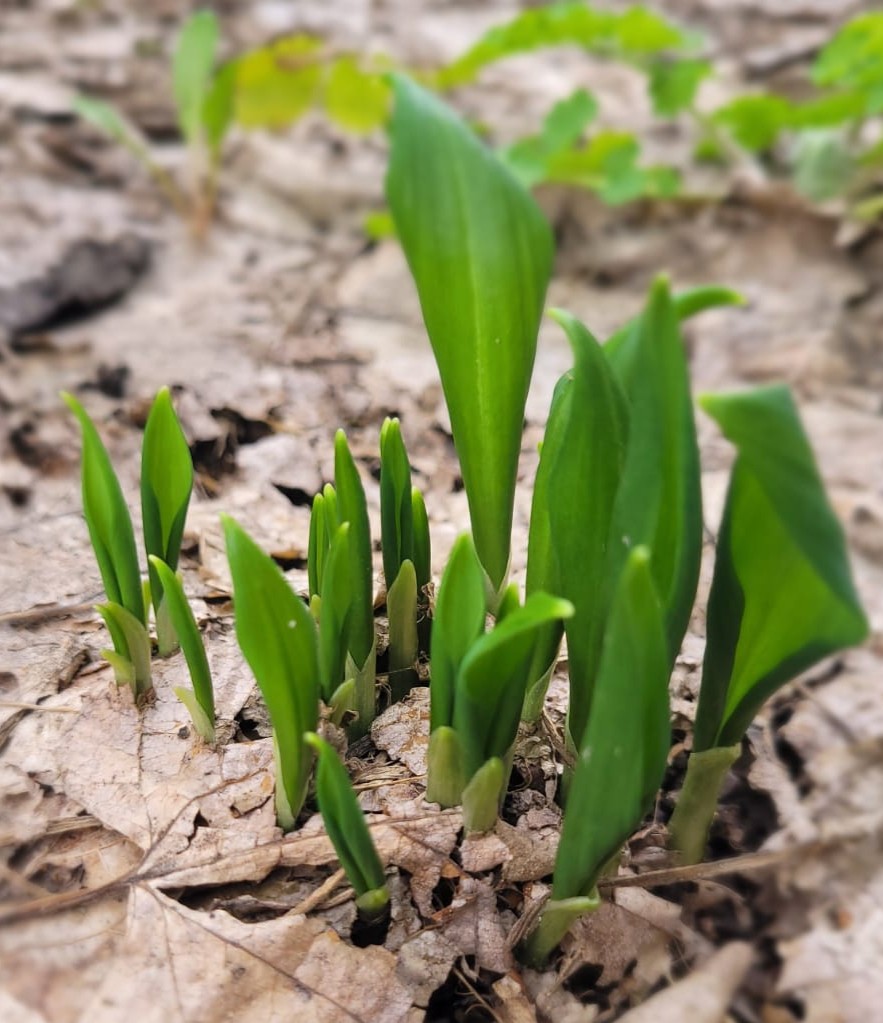
Like many woodland spring specialists, wild garlic takes advantage of a brief window of light before deciduous trees produce their full canopy. During this period, sunlight reaches the forest floor more easily, allowing rapid growth.
As shade intensifies later in spring, the plant gradually enters dormancy and disappears until the following season.
Its appearance is temporary.
Its timing is not.
The Forest Announces Itself by Scent
Wild garlic is often noticed before it is seen.
Walk through a forest in early spring and entire sections may carry a familiar garlic aroma.
Crushing a leaf immediately releases sulfur compounds similar to those found in cultivated garlic (Allium sativum). Interestingly, these compounds are not stored directly in active form.
When leaves are cut, crushed or chewed, enzymatic reactions transform precursor molecules into bioactive compounds such as allicin - responsible for the characteristic scent and many of the biological properties associated with Allium species.
The stronger smell after harvesting is therefore not accidental.
It is chemistry becoming active.
For the plant itself, this mechanism functions as a natural defense system. For us, it creates one of the defining sensory experiences of spring forests.
The Story Behind “Bear’s Garlic”
Wild garlic has been part of European food traditions and herbal knowledge for centuries.
Historically, it was associated with spring renewal, seasonal diets and recovery after winter. Traditional herbal systems often described it as a plant linked with digestion, circulation and revitalization.
Its common name, bear’s garlic, carries one of the best-known stories associated with the species.
According to folklore, bears consumed wild garlic after emerging from hibernation to restore strength and regain energy. This idea is reflected in the Latin name ursinum, derived from ursus, meaning bear.
Whether symbolic or not, the story reflects something ecologically interesting.
Many spring plants emerge precisely during the transition from winter dormancy into renewed biological activity.
Wild garlic arrives at the same moment forests begin rebuilding momentum.
Nutritional Value and Seasonal Use
Despite its low caloric value, wild garlic is nutritionally dense.
Young leaves contain vitamin C, minerals, sulfur compounds, antioxidants and various phenolic constituents commonly associated with Allium species.
Research continues to explore the biological activity of sulfur-containing compounds found throughout the genus, particularly their roles in antimicrobial activity and oxidative processes.
At the same time, wild garlic is best understood within the context of seasonal food traditions rather than modern wellness trends.
Its significance comes not only from individual compounds, but also from its historical role as one of the first fresh spring plants available after winter. Long before the language of functional foods and nutritional optimization existed, seasonal plants such as wild garlic were already valued as part of local diets and traditional knowledge.
Fresh leaves are commonly used in:
- Salads
- Soups
- Herbal spreads
- Pesto preparations
- Infused oils
- Fermented products
Minimal processing is often preferred because heat can alter some of the volatile compounds responsible for the plant's characteristic aroma and flavor. Traditionally, leaves collected before flowering are considered the most desirable, with softer texture and milder flavor.
Harvesting with the Forest in Mind
The growing popularity of wild garlic has increased foraging pressure in many regions.
Dense populations can create the impression of endless abundance, but forest ecosystems remain sensitive to disturbance. What appears plentiful in a single season may take years to recover if harvested irresponsibly.
Responsible harvesting favors selective leaf collection while leaving root systems, bulbs, and surrounding vegetation intact. Removing entire plants or collecting excessively can weaken local populations and reduce long-term regeneration.
Wild garlic is not simply an ingredient.
It is part of a larger forest system shaped by decomposition, moisture, microorganisms, and seasonal ecological cycles.
The goal of foraging should not only be collection, but continuity.
The forest should remain richer after our visit, not poorer.
Safety First: Correct Identification Matters
Despite its popularity, correct identification is essential.
Wild garlic may be confused with toxic species including Convallaria majalis and Colchicum autumnale. While the flowers of these species are quite distinctive, confusion most commonly occurs before flowering, when only leaves are present. In some areas, confusion with Arum species may also occur.
One of the simplest field characteristics is aroma.
Crushed wild garlic leaves release a clear garlic scent.
Still, smell alone should never replace reliable botanical identification.
If uncertainty exists, do not harvest.
A Seasonal Messenger
Wild garlic occupies an unusual place in the forest.
It is simultaneously a woodland species, a traditional food, a medicinal plant, a seasonal indicator and a signal of ecological renewal.
Long before concepts such as functional foods, microbiomes and regenerative systems entered modern vocabulary, seasonal plants already played these roles within traditional diets.
Wild garlic reminds us that renewal often begins quietly.
Beneath fallen leaves and within humus-rich soils.
Among microorganisms and fungal networks rebuilding activity after winter.
Spring is not merely a season.
It is a biological recalibration and wild garlic is one of its first signals.